 Arcana Mahjong Arcana Mahjong
Arcana Mahjong
Mahjong solitaire looks simple, but boards often fail because of move order. This page goes deeper than quick tips: it explains how to open layers, preserve flexibility, control the board, and make choices that improve your future options instead of shrinking them.
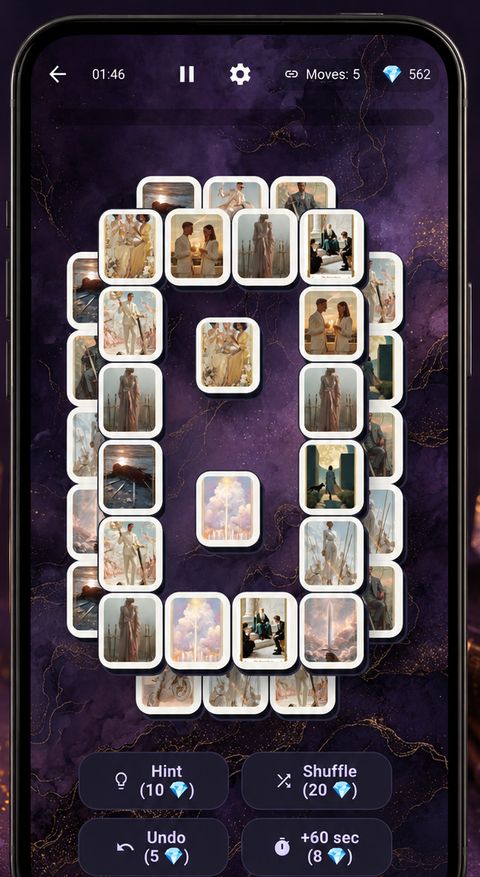
In mahjong solitaire, the board changes after every match. That means each decision affects what becomes playable next. A board rarely fails because the player does not know the rules. It usually fails because the wrong pair was taken at the wrong time.
Strong strategy is not about memorizing dozens of tricks. It is about learning how to preserve options, reveal useful tiles, and avoid moves that make the board narrower too early.
The easiest visible pair is not always the strongest one. A revealing move is usually better because it opens a blocked side, uncovers a tile underneath, or frees a new section of the board.
Tiles on higher layers often control access to several other tiles below them. Clearing these pieces early improves visibility and usually creates more legal matches.
Good strategy keeps multiple routes alive. If one move leaves you with only one narrow path, while another keeps several match options open, the second move is usually safer.
Some tiles act like gates. They may not look important at first, but removing them can release an entire cluster underneath. Strategy improves when you notice which tiles control larger structures.
Over-clearing one area while ignoring other blocked regions can reduce balance on the board. It is often better to open several areas than to tunnel aggressively through only one side.
Before taking a pair, ask whether it exposes more tiles, opens a side, or frees part of a covered layer.
Some pairs look harmless, but using them can destroy useful future combinations and reduce your flexibility.
When more than one pair is available, compare them by future value, not only by immediate convenience.
You do not need to calculate the whole board. Often one or two moves ahead is enough to avoid an obvious trap.
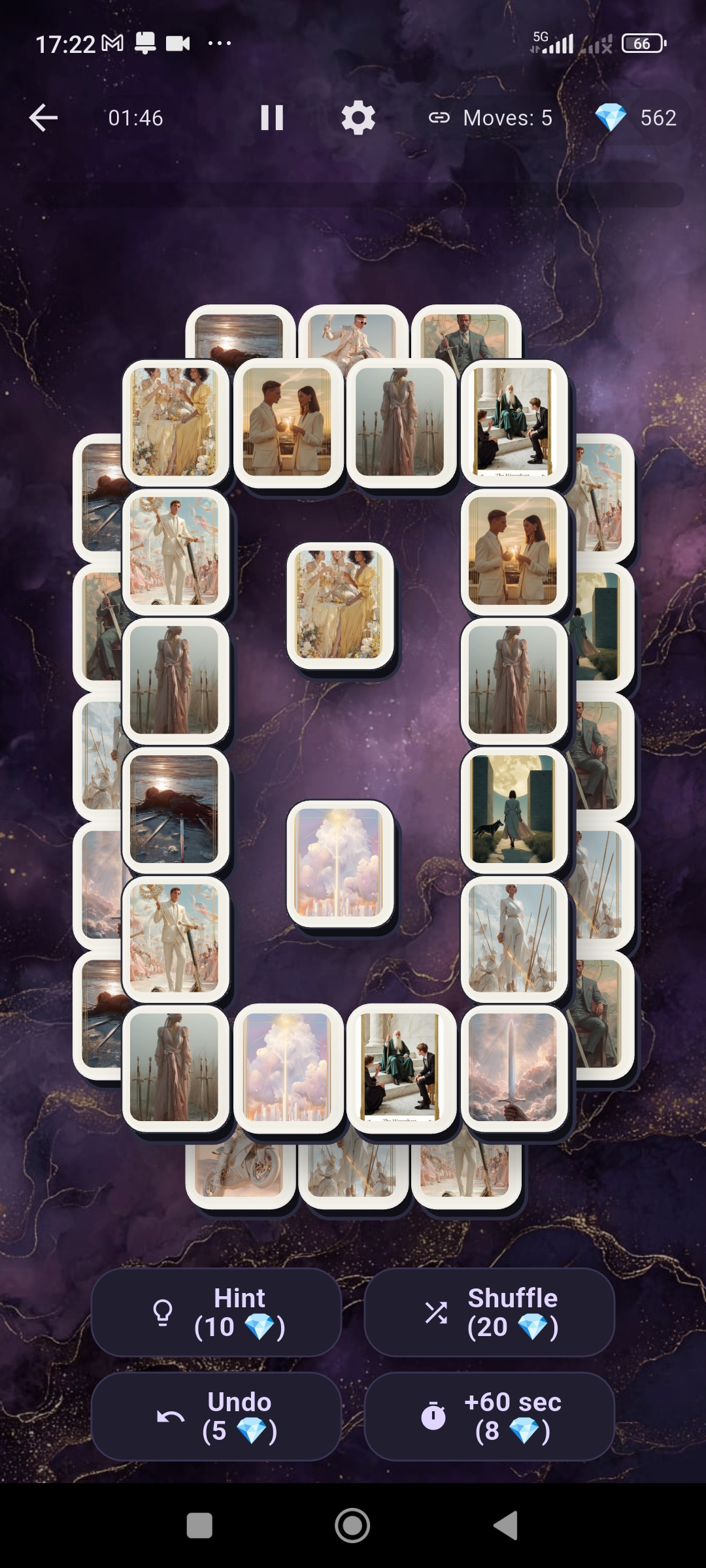
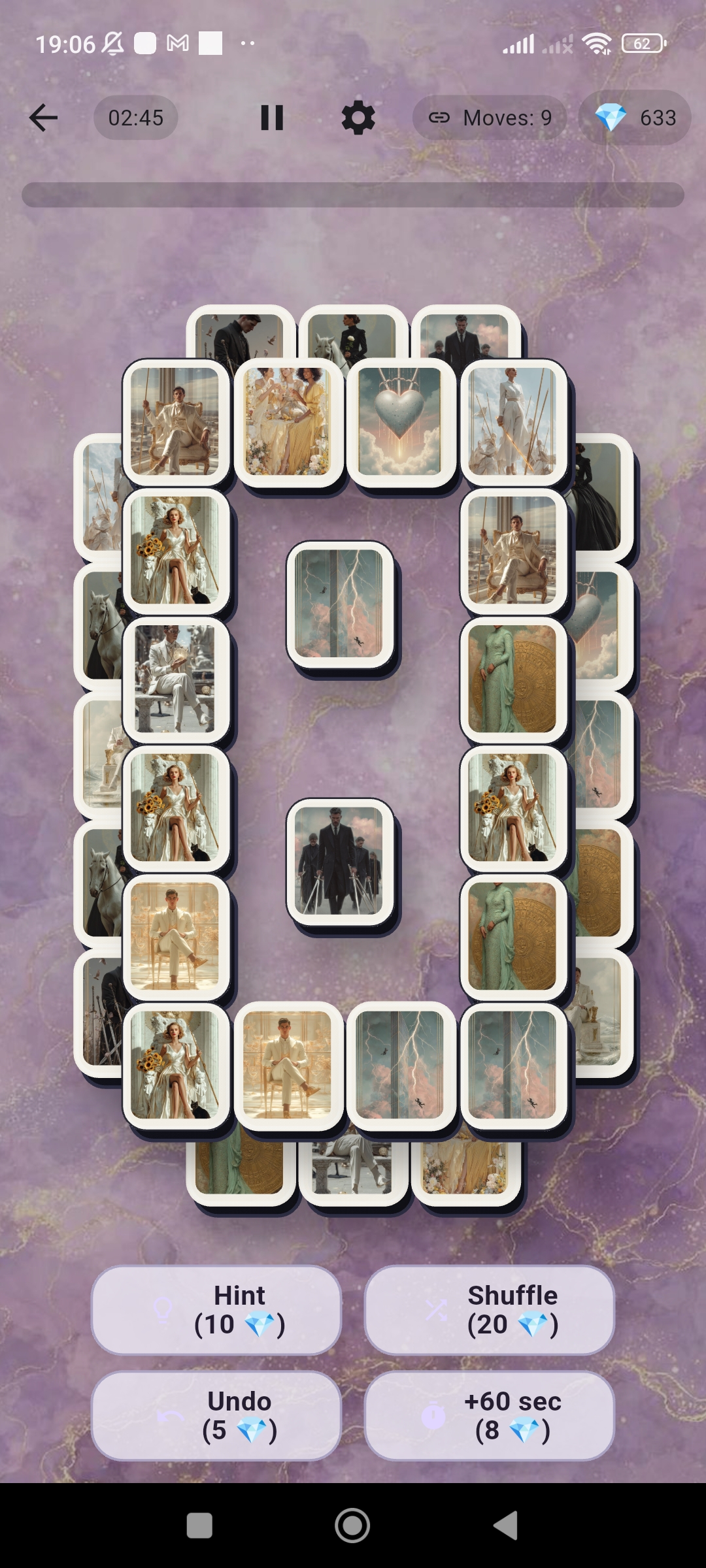
Hint is useful when you stop seeing the structure clearly. It is best used as a prompt, not as automatic strategy.
Undo works best right after a move that closed too many options or broke a useful sequence.
Use Shuffle when the board has become too rigid to continue productively, not just because one choice feels uncomfortable.
Arcana Mahjong can be played seriously or casually. Good strategy helps, but helpers also support a smoother relaxing session.
If you want the faster version, go back to the quick tips page. If you want the foundations, revisit the rules and beginner guide.
The main idea is to choose moves that reveal more tiles, preserve more future options, and avoid shrinking the board too early.
No. The strongest move is often the one that opens a blocked area or frees a hidden group, not the easiest visible pair.
Upper tiles often control access to several lower tiles. Removing them early can improve the board much faster.
You usually do not need deep calculation. Looking one or two moves ahead is often enough to avoid obvious dead ends.
Yes. Arcana Mahjong is available on both the App Store and Google Play.
Play Arcana Mahjong on the platform you prefer.